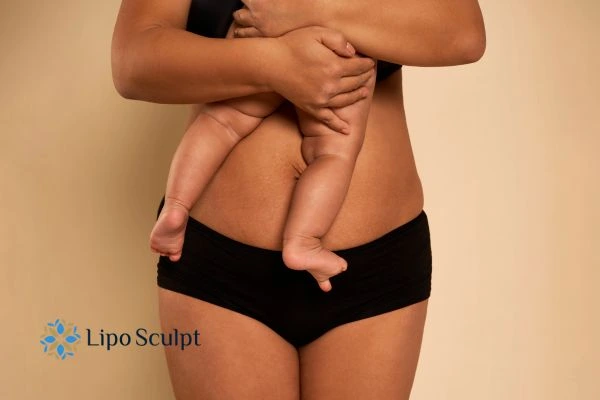
Diastasis recti, sometimes called abdominal separation or divarication of the rectus abdominis, is particularly common during and after pregnancy. It occurs when the tissues between the two sides of the rectus abdominis become stretched, increasing the distance between the muscles.
For some women, the gap between the abdominal muscles gets smaller in the months after giving birth. But that doesn’t happen for everyone. You may still notice a change in the shape of your tummy, feel that your core isn’t as strong as it used to be, or have some discomfort. If these problems continue, it’s worth getting them checked.
Tone Sculpt uses electromagnetic muscle stimulation technology to produce involuntary muscle contractions. However, it is important to understand what this type of treatment may realistically help with—and what it cannot be expected to do.
What Is Diastasis Recti?
The rectus abdominis muscles extend vertically along the front of the abdomen. The linea alba is a strong strip of connective tissue that sits between the two sides of the abdominal muscles.
As the baby grows, the stomach muscles stretch to make room for the uterus. This can leave a gap between the two muscles at the front of the abdomen. For many women, this gap gradually gets smaller after giving birth, but everyone’s recovery is different.
Diastasis recti isn’t just about how your stomach looks. It can also cause weakness around the abdomen, a bulge or “doming” when you move, and make some everyday movements harder. Some people may also notice problems with their back or pelvic floor.
If you have persistent pain, significant weakness or concerns about a possible hernia, it is sensible to speak with your GP or an appropriate healthcare professional rather than assuming the problem is purely cosmetic.
Why Consider Non-Surgical Options?
Abdominal separation can often be managed without surgery, depending on the individual and their symptoms. Physiotherapy and exercises that target the abdominal and pelvic-floor muscles may form part of an individual’s recovery plan. If you are concerned about persistent separation, a GP or physiotherapist can assess your symptoms and discuss suitable options.
Some people may also be interested in non-invasive aesthetic treatments that stimulate the abdominal muscles.
Electromagnetic muscle stimulation may be an option for some people, depending on their circumstances and the specific device being used. Rather than involving surgery, electromagnetic muscle stimulation uses electromagnetic energy to produce involuntary muscle contractions. See Here: 6 Diastasis Recti Pregnancy Mistakes That Make Recovery Harder Than It Needs to Be: Full Guide To Safeguard Post-Pregnancy Issues
The aim is to stimulate the abdominal muscles through repeated involuntary contractions during a treatment session.
What Does Research Say About Electromagnetic Muscle Stimulation?
Research involving certain high-intensity electromagnetic muscle-stimulation devices has investigated changes in abdominal muscle thickness and the measured distance between the rectus abdominis muscles.
One small MRI study involving a specific HIFEM device reported an average reduction in measured rectus abdominis separation following a course of treatment, together with increased abdominal muscle thickness.
A separate one-year follow-up study involving the same type of technology reported that reductions in measured abdominal separation remained detectable in the small group studied. The authors also noted that further research was needed.
These findings are of interest, but they should not be interpreted as evidence that everyone will experience the same result.
Importantly, published research on a particular HIFEM device or protocol should not automatically be presented as evidence for every treatment marketed under a different device or brand name.
What Does the Evidence Actually Tell Us?
Small studies involving certain HIFEM devices have reported measurable changes in abdominal muscle thickness and reductions in measured abdominal separation.
However, research in this area remains limited, with relatively small study groups and differences in devices and treatment protocols. Some studies have involved small numbers of participants, and treatment protocols vary.
This means it would be inappropriate to describe Tone Sculpt as a guaranteed “repair” or “cure” for diastasis recti, particularly where the available research relates to other specific devices.
It is also important not to suggest that HIFEM replaces physiotherapy, particularly for someone experiencing pain, functional problems or significant abdominal separation.
The most responsible approach is to consider the individual’s circumstances first and determine whether a non-invasive aesthetic muscle-stimulation treatment is appropriate. Check Out: How to Support Your Body During Pregnancy for Faster Postnatal Recovery
Who May Be Suitable?
Suitability depends on your individual circumstances, medical history and the treatment device being used.
A consultation should establish what you hope to improve and whether your concern is primarily cosmetic or may require medical assessment.
People with certain implanted electronic or metallic devices may not be suitable for electromagnetic muscle stimulation, depending on the specific device and its manufacturer’s contraindications. Restrictions and contraindications depend on the specific technology and device, so these should be confirmed with the treatment provider before booking.
If you are pregnant, have recently given birth, have significant abdominal pain, have a suspected hernia, or have another medical condition affecting the abdominal wall, seek appropriate medical advice before considering an aesthetic treatment.
This is not a complete list of contraindications or precautions. Your suitability should be assessed against the current safety guidance for the specific device being used.

What Happens During Treatment?
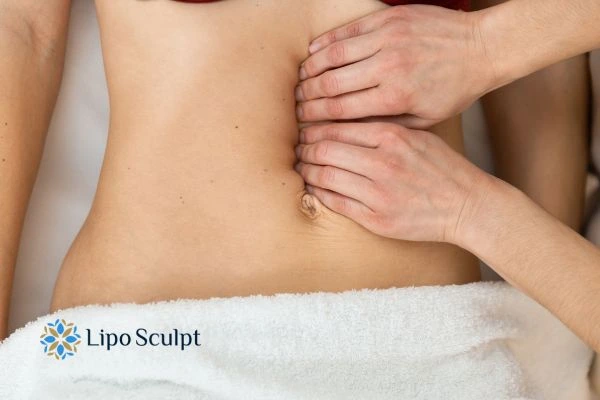
Treatment involves positioning the applicator over the treatment area so that electromagnetic energy can stimulate the abdominal muscles, in accordance with the specific device’s treatment protocol.
You may experience strong involuntary abdominal muscle contractions during treatment. The sensation may feel unusual initially, and treatment intensity should be managed in accordance with the manufacturer’s protocol and the individual’s tolerance.
Because treatment protocols vary by device, these details should come from Lipo Sculpt’s treatment documentation rather than being copied from another HIFEM system.
Results, Expectations and Limitations
It is important to separate three different goals: improving muscle strength or tone, changing abdominal appearance and reducing the measured distance between the rectus muscles.
These are not necessarily the same thing.
A person may notice a firmer-looking abdomen without completely resolving the measured separation between the abdominal muscles. Equally, a measured change in separation does not necessarily mean that every associated symptom will disappear.
Studies on some HIFEM devices have shown measurable changes, but the results can vary from one device and person to another. These findings do not mean that everyone using Tone Sculpt will achieve the same results.
Tone Sculpt should therefore be viewed as a possible addition to a broader approach rather than a guaranteed replacement for exercise, physiotherapy or medical treatment.

Is Tone Sculpt a Replacement for Physiotherapy or Medical Care?
No treatment should be presented as a substitute for appropriate medical care without evidence to support that claim.
NHS guidance recognises pelvic-health and physiotherapy services as an important part of managing persistent abdominal separation.
If your main concern is pain, significant weakness, pelvic-floor symptoms or a suspected hernia, discuss this with an appropriate healthcare professional.
If your concern is mainly the appearance or muscle tone of your abdomen, a consultation can help determine whether a non-invasive aesthetic treatment is appropriate.

Frequently Asked Questions
Q: Can diastasis recti improve without surgery?
Yes. Diastasis recti can improve without surgery for some people. Post-pregnancy abdominal separation may respond to time, appropriate exercise, and physiotherapy, depending on the individual. Surgery is not necessarily needed in every case.
Q: Can HIFEM reduce abdominal separation?
Some published studies have reported reductions in rectus abdominis separation following HIFEM treatment. However, the available evidence is limited, and results should not be guaranteed.
Q: Is Tone Sculpt suitable after pregnancy?
Potentially, but suitability depends on factors including how recently you gave birth, your recovery, and your medical history.
Q: Does Tone Sculpt repair the connective tissue between the abdominal muscles?
Do not describe it as repairing or healing the linea alba unless specific clinical evidence supports that claim for the exact device and treatment protocol.
Q: Should I see a physiotherapist before treatment?
It may be worth speaking to a physiotherapist first, especially if you have ongoing pain, noticeable abdominal separation or problems with movement and core strength. They can assess your symptoms and, where appropriate, recommend exercises or other treatment to support your recovery.
Q: Are results guaranteed?
No. Everyone responds differently to treatment. While some studies have reported changes following HIFEM treatment, these results are based on specific groups of participants and do not mean the same outcome can be expected by everyone.
Q: What should I ask during a consultation?
A consultation is a good opportunity to ask about the device being used, the evidence behind the treatment and whether it is suitable for you. You can also ask what kind of results you might realistically expect, how many sessions may be recommended and whether there are other options you should consider.
References & Further Reading
[1] NHS — Your post-pregnancy body: Separated stomach muscles — current NHS guidance. Supports the explanation of post-pregnancy abdominal separation and the role of exercises/physiotherapy.
[2] University Hospitals Bristol and Weston NHS Foundation Trust — Diastasis of the abdominal muscles — NHS physiotherapy information. Supports the anatomical explanation and physiotherapy context.
[3] Kinney BM et al. — High-intensity focused electromagnetic therapy evaluated by magnetic resonance imaging: Safety and efficacy study of a dual tissue effect based non-invasive abdominal body shaping — Lasers in Surgery and Medicine, 2019. Supports the discussion of published HIFEM research and measured changes in abdominal separation.
[4] MRI and CT Assessment of Abdominal Tissue Composition in Patients After High-Intensity Focused Electromagnetic Therapy Treatments: One-Year Follow-Up — 2020. Supports the discussion of longer-term measured changes reported in a small study.
[5]ASA/CAP — Substantiation for health, beauty and slimming claims — 2025. Supports the requirement for evidence behind objective health and beauty claims.
[6] ASA/CAP — Cosmetic Interventions: Non-surgical procedures — 2025. Supports responsible presentation of non-surgical cosmetic procedures and avoiding unsupported efficacy claims.
For more information, please call us on 03300101799.