CryoPen is a form of targeted cryotherapy used to freeze selected areas of skin. Rather than treating a large area, the device delivers a focused jet of nitrous oxide (N₂O) to the area being treated.
Cryotherapy has been used in dermatology for many years, particularly for certain benign skin lesions and some sun-damaged skin conditions. [1] The CryoPen system uses a different delivery method from traditional liquid-nitrogen cryotherapy, allowing a small area to be treated with a focused application.
But there is an important point to understand before considering treatment: not every mark, lump or change on the skin should be treated cosmetically.
A lesion needs to be assessed for suitability first. If its appearance is unusual or the diagnosis is uncertain, medical assessment may be more appropriate than cosmetic treatment.
At Lipo Sculpt , CryoPen may be considered for a range of skin concerns following an assessment.
What can CryoPen be used for?
Cryotherapy can be used for a number of superficial skin lesions. Depending on the lesion and the individual circumstances, these may include:
- certain age or sun spots
- skin tags
- selected warts and verrucae
- some cherry angiomas
- some seborrhoeic keratoses
Cryotherapy is also used within medical dermatology for conditions such as actinic keratosis. However, actinic keratosis is different from a purely cosmetic skin blemish because it is associated with sun damage and can have implications for skin cancer risk. [2]
The important question is therefore not simply “Can CryoPen remove this?” but “Has this lesion been correctly identified, and is freezing it appropriate?”
That distinction is particularly important for pigmented lesions, changing marks and anything that looks unusual.
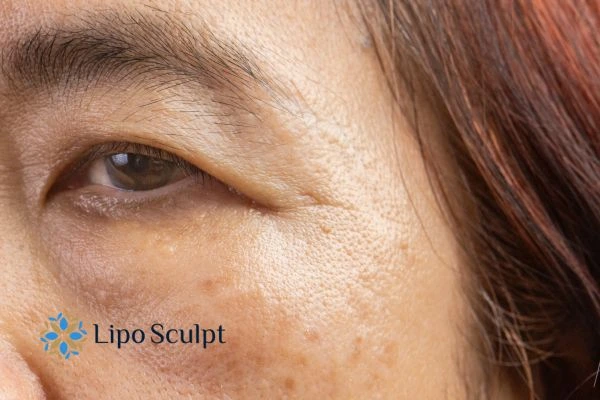
1. Age spots and sun spots
Age spots, also called solar lentigines, are flat areas of increased pigmentation that commonly develop on skin exposed to sunlight over time.
They are often seen on areas such as:
- the backs of the hands
- face
- shoulders
- forearms
They are usually harmless, but not every brown or pigmented mark is an age spot.
This is why a new, changing or unusual pigmented lesion should not simply be assumed to be suitable for cosmetic removal. Check Out: Cryopen: The Revolutionary Treatment for Age Spots Unveiled
How might CryoPen help?
Cryotherapy works by freezing the targeted skin tissue. Following treatment, the treated area can become red, swollen, blistered or crusted before it gradually heals. [1]
The eventual appearance varies between individuals. Some pigmentation may improve, but treatment does not prevent new sun spots from developing elsewhere.
Sun protection remains important, particularly if you are prone to pigmentation caused by UV exposure.
2. Skin tags
Skin tags are soft, fleshy growths that commonly occur in areas exposed to repeated rubbing, including the neck, underarms and folds of the skin.
They are usually harmless and do not necessarily need treatment. Some people choose to have them removed because they catch on clothing, become irritated or affect their appearance. [3]
Can CryoPen remove a skin tag?
Freezing is one method used to remove skin tags. [3]
The treated tissue is damaged by freezing and subsequently separates as the area heals. The process can be relatively quick, but the skin may still become sore, swollen, blistered or crusted afterwards.
It is also worth remembering that removing an existing skin tag does not necessarily prevent another one from developing in the future.
When should a skin tag be checked?
Do not automatically assume that every skin growth is a skin tag.
The NHS advises seeking medical advice if a skin tag becomes larger, painful, bleeds or if you suddenly develop many skin tags. [3]
3. Warts and verrucae
Warts and verrucae are caused by infection with human papillomavirus (HPV). Verrucae commonly occur on the feet, while warts can appear on different areas of the body. [4]
They can disappear without treatment, although some remain for a long time or cause discomfort.
Cryotherapy is one recognised treatment option. NHS guidance notes that freezing can cause a wart or verruca to fall away after treatment, although more than one session may sometimes be required. [4]
What does wart freezing feel like?
Freezing can cause a sharp cold or stinging sensation. The treated area may subsequently become sore or blister.
The response varies according to the size, thickness and location of the wart, so it would be unrealistic to promise that one treatment will remove every wart. See Here: Say Goodbye to Verrucae with CryoPen Technology
There are also other treatment options, including pharmacy treatments containing salicylic acid. A pharmacist, GP or podiatrist can advise on appropriate treatment depending on where the wart or verruca is located. [4]
When should you seek medical advice?
Speak to a GP if you are worried about a growth, if a wart keeps returning, or if it is very large, painful, bleeding or changing in appearance. Warts on the face or genitals should also be medically assessed. [4]

4. Cherry angiomas
Cherry angiomas are small red vascular skin growths. They are common and are generally harmless.
Some people opt to have skin tags removed for cosmetic reasons, especially when they are noticeable or regularly catch on clothing.
Cryotherapy is one method that may be considered for selected superficial lesions, but treatment suitability depends on the individual lesion.
A cherry angioma should not automatically be assumed to be the cause of every new red mark on the skin. If a lesion looks unusual, changes or bleeds, medical assessment is sensible before cosmetic treatment.
What happens after treatment?
Because cryotherapy intentionally damages the targeted tissue, the area can become red, swollen, blistered or crusted while it heals. Pigment changes can also occur. [1]
The final cosmetic result therefore cannot be guaranteed, and the possibility of a temporary or longer-lasting change in skin colour should be discussed before treatment.
5. Seborrhoeic keratoses and other keratotic lesions
“Keratotic” simply means that an area contains an increased amount of keratin, a protein found in the outer layer of the skin.
Seborrhoeic keratoses are common benign skin growths. They can be brown, black, pink or skin-coloured and often have a rough or slightly raised surface. [5]
Cryotherapy is one treatment option for suitable seborrhoeic keratoses. Other approaches can include curettage or other procedures depending on the lesion and the clinical assessment. [5]
Why diagnosis matters
A dark or unusual seborrhoeic keratosis can sometimes resemble other pigmented lesions. The British Association of Dermatologists therefore advises that changing pigmented lesions should be checked to ensure the diagnosis is correct. [5]
This is one of the reasons cosmetic lesion removal should not be approached as simply “freezing off a mark”.
If there is uncertainty about what a lesion is, medical assessment may be needed before any removal is considered.
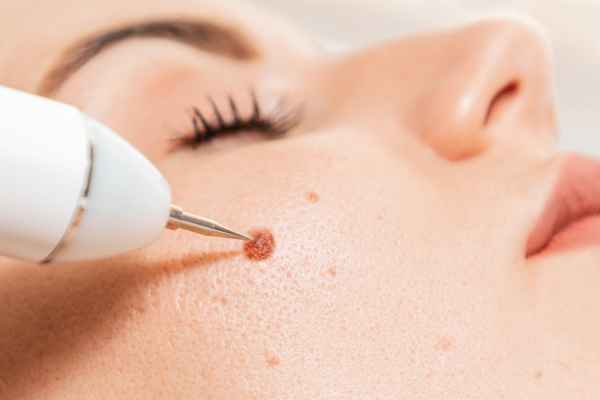
What actually happens during a CryoPen treatment?
The CryoPen system delivers a focused jet of nitrous oxide to the treatment area. The extreme cold causes controlled freezing of the targeted tissue.
The exact application depends on the lesion being treated, including its size, thickness and location.
During treatment, you may experience:
- a sudden cold sensation
- stinging
- mild to moderate discomfort
- temporary whitening of the treated area
The treatment itself can be very short, particularly when only a small lesion is being treated.
However, a short treatment time does not mean the skin has no healing process afterwards.
What happens to the skin afterwards?
The treated area may initially appear red or swollen. Depending on the depth and location of the treatment, a blister or crust may develop. [1]
The area then heals gradually.
Healing time varies. Some areas settle relatively quickly, while deeper treatments or areas such as the lower legs can take longer. [1]
Follow your practitioner’s aftercare instructions carefully and avoid touching, picking or scratching the treated area, especially if a scab develops, as this can increase the likelihood of scarring. Cryopen – Safest Seborrheic Keratosis Treatment
Are there risks or side effects?
Cryotherapy is an established treatment technique, but it is not risk-free.
Possible reactions include:
- redness
- swelling
- soreness or stinging
- blistering
- crusting
- temporary or permanent changes in skin pigmentation
- scarring
- infection
- recurrence or incomplete removal of the lesion
The likelihood of these effects varies depending on the lesion, treatment depth, body site and individual skin characteristics. [1][6]
For people concerned about pigmentation, this is an especially important part of the consultation. A change in skin colour can sometimes last longer than the initial healing period.
Is CryoPen suitable for every skin lesion?
No.
This is one of the most important points to understand.
CryoPen is not a general-purpose treatment for every mole, lump, pigmentation mark or skin growth.
A practitioner should consider whether the lesion appears appropriate for treatment. If there is uncertainty about its nature, cosmetic freezing may not be appropriate. See Dermatofibroma – How Cryopen Removes It Safely
You should seek medical advice if a skin lesion:
- changes in size, shape or colour
- bleeds
- becomes persistently painful or tender
- develops an ulcer
- grows rapidly
- does not heal
- looks noticeably different from your other marks
NHS guidance recommends medical assessment for concerning skin changes, including changing or bleeding lesions. [2][4]
What about moles?
Moles deserve particular caution.
A mole that needs investigation should not simply be removed cosmetically because it is unwanted. The British Association of Dermatologists explains that where there is doubt about the diagnosis, a mole may need to be removed surgically so that tissue can be examined under a microscope. [7]
For that reason, anyone concerned about a changing or suspicious mole should speak to an appropriate healthcare professional rather than relying on cosmetic lesion removal.
CryoPen compared with traditional cryotherapy
CryoPen and conventional dermatological cryotherapy both use freezing to damage targeted tissue, but the equipment and delivery method can differ.
Traditional dermatological cryotherapy often uses liquid nitrogen, which reaches temperatures of around -196°C.[1]
CryoPen systems use nitrous oxide delivered through a focused applicator. Manufacturer information describes the CryoPen system as delivering a precise nitrous oxide flow for cryosurgical treatment. [8]
That difference in delivery method does not mean CryoPen is automatically suitable for every lesion or that it eliminates the risks associated with freezing tissue.
The choice of treatment should be based on the lesion and the individual’s circumstances rather than simply the equipment being used.
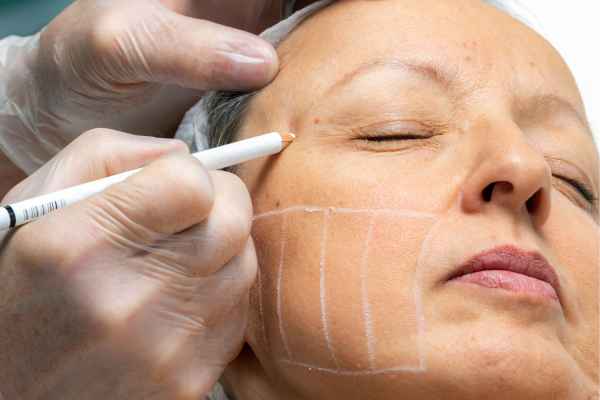
What should you ask before having CryoPen treatment?
A good consultation should leave you understanding what is being treated and why.
Useful questions include:
- What do you believe this lesion is?
- Why is CryoPen appropriate for it?
- Is there any reason I should have it medically assessed first?
- What should I expect immediately after treatment?
- Could the area blister or change colour?
- How long might the skin take to heal?
- Could I need more than one treatment?
- What should I do if the area becomes increasingly painful or shows signs of infection?
- Are there alternative treatment options?
- What happens if the lesion does not respond as expected?
These are much more useful questions than simply asking whether the treatment is “pain-free” or “permanent”.
When CryoPen may not be the right choice
Cryotherapy may not be appropriate when:
- the lesion has not been adequately identified
- there is concern that the lesion could be malignant
- the area requires further medical investigation
- the lesion is unsuitable because of its size, depth or location
- the potential cosmetic result does not justify the risks
- an alternative treatment would be more appropriate
The safest treatment is not necessarily the most convenient one.
If a practitioner has concerns about a lesion, referral for medical assessment should take priority over cosmetic treatment.
Is CryoPen right for you?
CryoPen can be a useful option for selected superficial skin lesions, but the right treatment depends on what the lesion actually is.
For cosmetic concerns such as suitable skin tags, age spots or other benign lesions, an assessment can help establish whether targeted cryotherapy is appropriate.
For anything that is changing, bleeding, painful, unusual or uncertain, medical assessment should come first.
At Lipo Sculpt , the aim should be to ensure that clients understand both the potential benefits and the limitations of treatment before deciding whether to proceed.
If you are considering CryoPen treatment, a consultation is the best place to discuss the specific lesion, expected healing, possible side effects and whether another option may be more suitable.
Summary
CryoPen can offer a targeted way of treating selected superficial skin lesions, but good treatment starts with correct identification and realistic expectations.
The most important question is not simply whether a device can freeze a skin lesion. It is whether freezing that particular lesion is appropriate, what alternatives exist and what the likely healing process will involve.
That is why a proper consultation should cover suitability, risks, expected results and aftercare before treatment begins.
FAQS
Q: Can CryoPen remove a skin tag permanently ?
Cryotherapy can remove an individual skin tag, but this does not mean you will never develop another skin tag elsewhere. As with other lesion-removal procedures, complete removal and recurrence cannot be guaranteed.
Q: Does CryoPen hurt?
You may feel a sharp cold or stinging sensation during treatment. The amount of discomfort varies depending on the lesion, treatment area and individual sensitivity. Cryotherapy should not be described as completely painless for everyone. [1]
Q: How long does the treated area take to heal?
There is no single healing time that applies to every treatment. Redness, blistering and crusting can occur, and the area may take several weeks to settle fully. Healing can take longer in some locations. [1][6]
Q: Can CryoPen treat actinic keratosis ?
Cryotherapy is an established treatment option for some actinic keratoses. However, actinic keratosis is a sun-damage-related skin condition with potential implications for skin cancer, so it should be properly assessed rather than treated as an ordinary cosmetic blemish. [2]
Q: Can CryoPen be used on a suspicious mole ?
A suspicious or changing mole should not simply be treated cosmetically. It should be appropriately assessed first. Where there is diagnostic uncertainty, medical investigation may be necessary. [7]
Q: Will CryoPen leave a scar?
Cryotherapy can sometimes cause scarring, although many treated areas heal without a significant scar. Pigment changes can also occur and may sometimes persist. [1][6]
Q: Can CryoPen be used on darker skin tones?
Cryotherapy can cause temporary or persistent changes in pigmentation, so skin tone is an important consideration during treatment planning. Suitability and treatment parameters should be assessed individually rather than assuming that exactly the same approach is appropriate for everyone. [1][6]
Q: What if I am not sure what the skin growth is?
Do not guess. If a growth is new, changing, bleeding, painful or unusual, seek appropriate medical advice before arranging cosmetic removal. It is safer to establish what a lesion is before deciding how it should be treated.
References
1. British Association of Dermatologists — Cryotherapy: Patient guidance covering cryotherapy, treatment process, healing and possible side effects. View source
2. NHS — Actinic Keratoses: Information on actinic keratoses, sun damage, symptoms, treatment and when medical assessment is needed. View source
3. NHS — Skin Tags: Guidance on skin tags, common symptoms, removal options and when to seek medical advice. View source
4. NHS — Warts and Verrucas: Information about causes, treatment options, cryotherapy and when professional assessment is recommended. View source
5. British Association of Dermatologists — Seborrhoeic Keratosis: Information on this common benign skin growth, diagnosis and available treatment approaches. View source
6. Gloucestershire Hospitals NHS Foundation Trust — Cryotherapy: Practical information on cryotherapy aftercare, healing, blistering, scarring and possible complications. View source
7. British Association of Dermatologists — Melanocytic Naevi (Pigmented Moles): Guidance on pigmented moles, changes that require assessment and why diagnosis matters before removal. View source
8. ASA/CAP — Cosmetic Interventions: Non-Surgical Procedures: UK advertising guidance covering evidence, efficacy claims, safety and responsible marketing of non-surgical cosmetic treatments. View source
For More Information, please call us today on 03300101799